Kaskade returned to San Francisco for something that felt closer to a homecoming than a routine tour stop. Having spent part of his early career in the city, the connection has long been embedded in his story, but this night carried a different kind of significance.
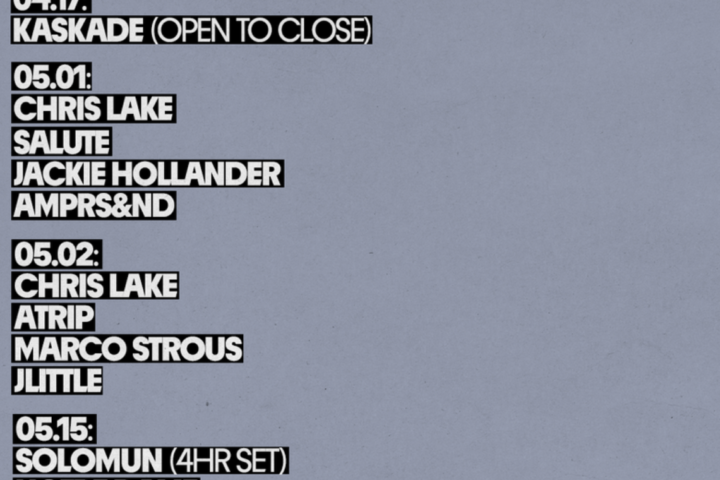
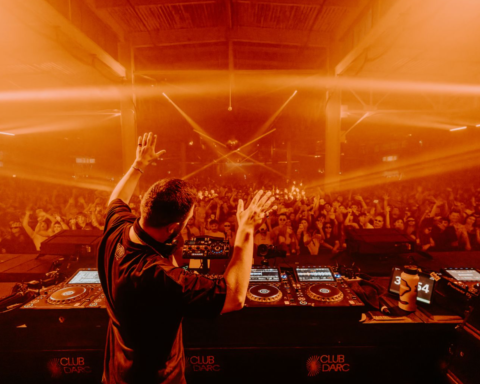
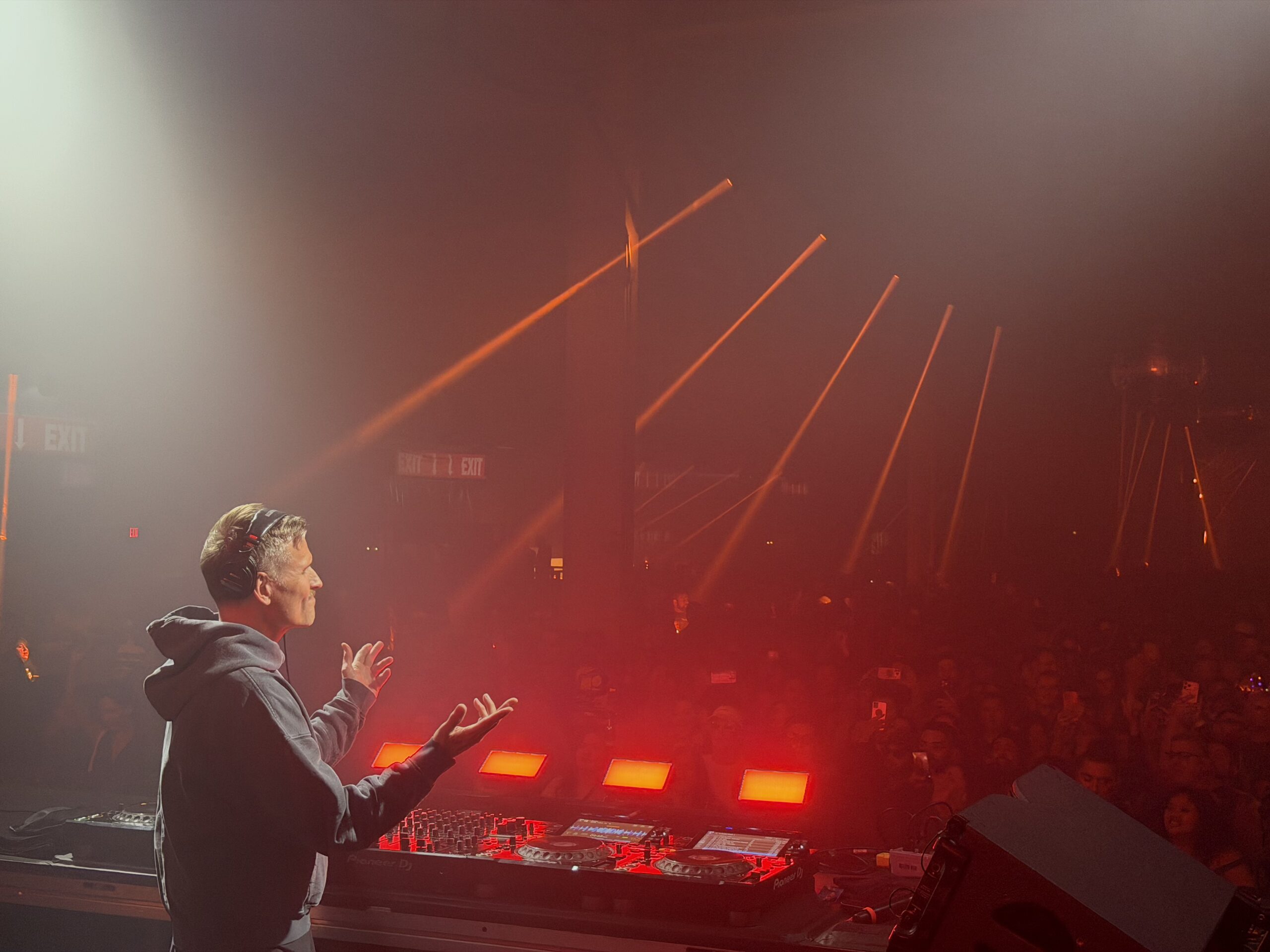
Just days after closing the iconic Sahara stage at Coachella Valley Music and Arts Festival, and with another weekend still ahead, Kaskade stepped into Pier 48 for a rare open-to-close set. The six-hour format offered a stark contrast to the tightly programmed, high-production festival environment he had just come from, trading spectacle for control and duration.
The event sold out in advance, and the crowd showed up early. The space filled quickly, creating a sense of anticipation that carried into the opening hours and set the tone for a night that felt fully engaged from the start.
Kaskade responded accordingly. Over the course of the night, he reached deep into his catalog, navigating through a wide range of styles and eras while keeping a consistent emotional feel throughout. His signature blend of uplifting, melodic, and vocal-driven house music remained at the center, giving the set a sense of cohesion even as it evolved.
The early portion of the night leaned into a deeper, more restrained sound. It felt patient, less about immediate recognition and more about establishing tone. Rather than rushing into familiar material, he allowed the room to settle into the groove, building a foundation that matched the steady energy of the crowd.
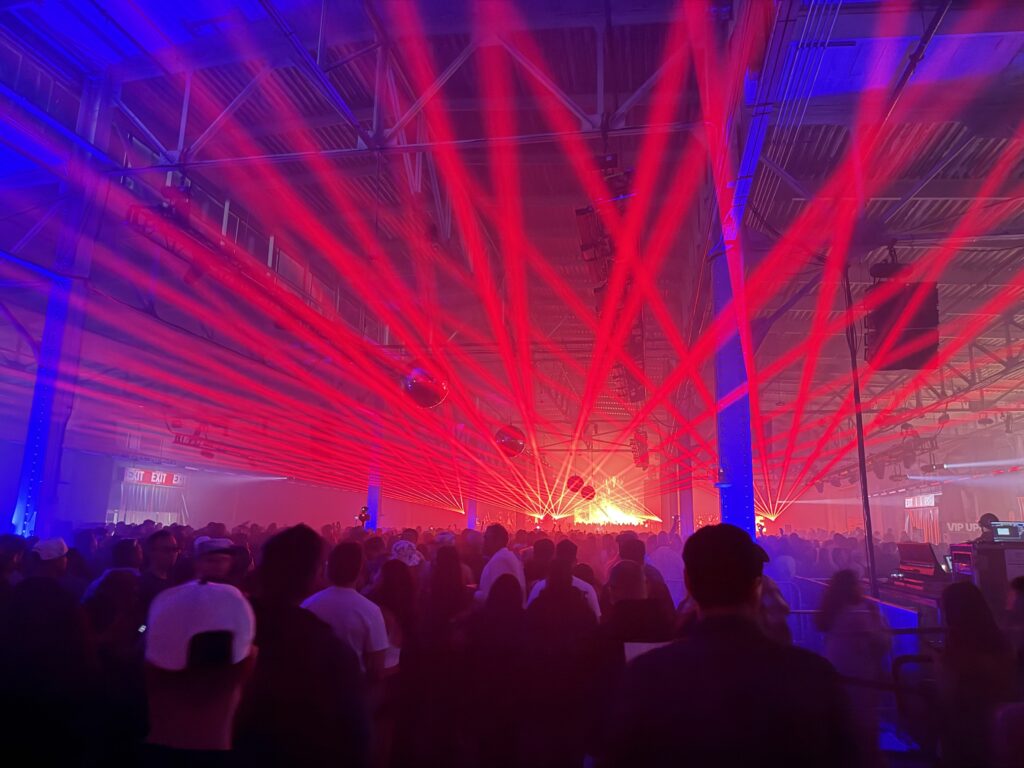
As the night progressed, both the sound and the space began to open up. The transition into the middle hours was gradual but clear, with familiar tracks beginning to surface and the crowd responding in kind. At the same time, the production evolved. Lighting intensified, movement in the room became more pronounced, and the atmosphere took on a heightened sense of momentum.
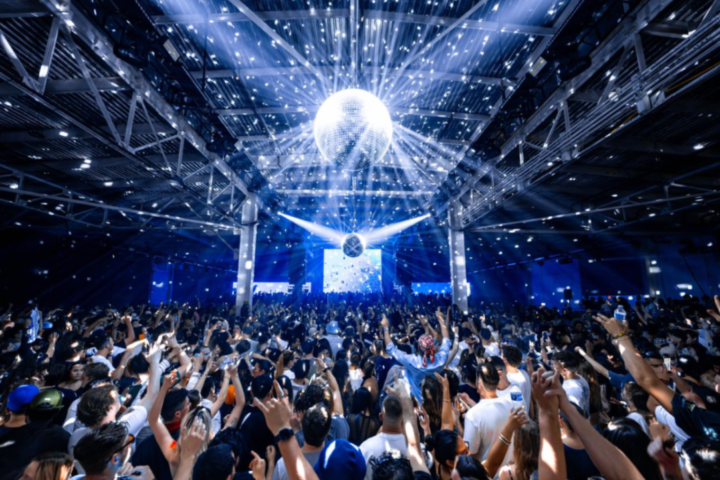
By the peak of the night, the transformation was complete. The row of disco balls hanging above the crowd, previously dim, came fully to life, casting light across the warehouse and signaling a shift into full stride. The room felt unified, with the energy no longer building but sustaining at a high level. Classic tracks drew strong reactions, and the space carried a communal, expressive feel that pushed the night forward without pause.
What stood out most, however, was the consistency. Across six hours, there was little sense of downtime or filler. The set moved with purpose, unfolding as a continuous arc rather than a series of disconnected highlights. Even as styles shifted, the overall tone remained intact, anchored by the emotional clarity that has long defined his sound.
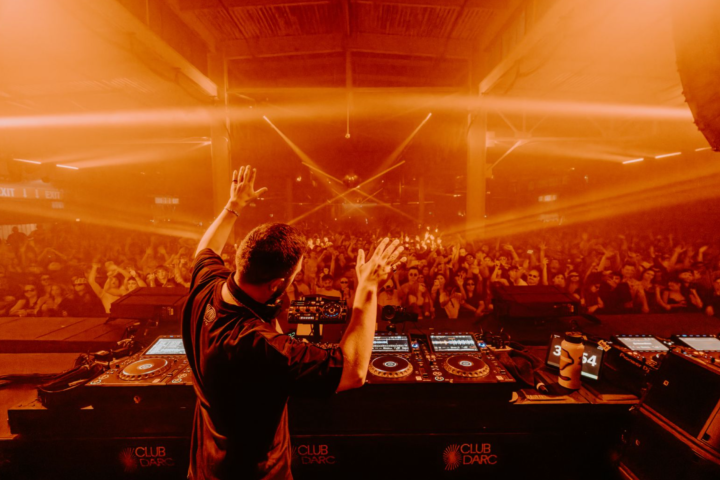
Just as notable was the endurance behind it. While the length of the night naturally wore on the crowd—I found myself stepping away more than once—Kaskade remained locked in throughout, manning the decks from start to finish with a steady, energized presence. There was no visible drop-off in focus or intensity, reinforcing the sense that this wasn’t simply a long set, but a fully sustained performance.
That energy held through the final stretch. There was no early drop-off, no soft landing. The night remained in full motion until the very end, closing with the same sense of intent it began with.
In a venue that has quickly built a reputation for hosting curated, multi-artist lineups rooted in underground sensibilities, this night felt like a departure. Handing full control to a single artist—especially one with Kaskade’s range and history—transformed the space into something slightly different. Whether that shift felt like an expansion of Club Darc’s identity or a temporary detour will likely depend on perspective, but for one night, the warehouse belonged entirely to him.