Long before Rosalía took the stage near the end of the U.S. leg of her summer tour, Oakland Arena had already begun to resemble the world of Lux. Classical music played beneath the house lights as fans moved through the aisles in white dresses, veils, and carefully styled outfits that echoed the album’s devotional imagery.
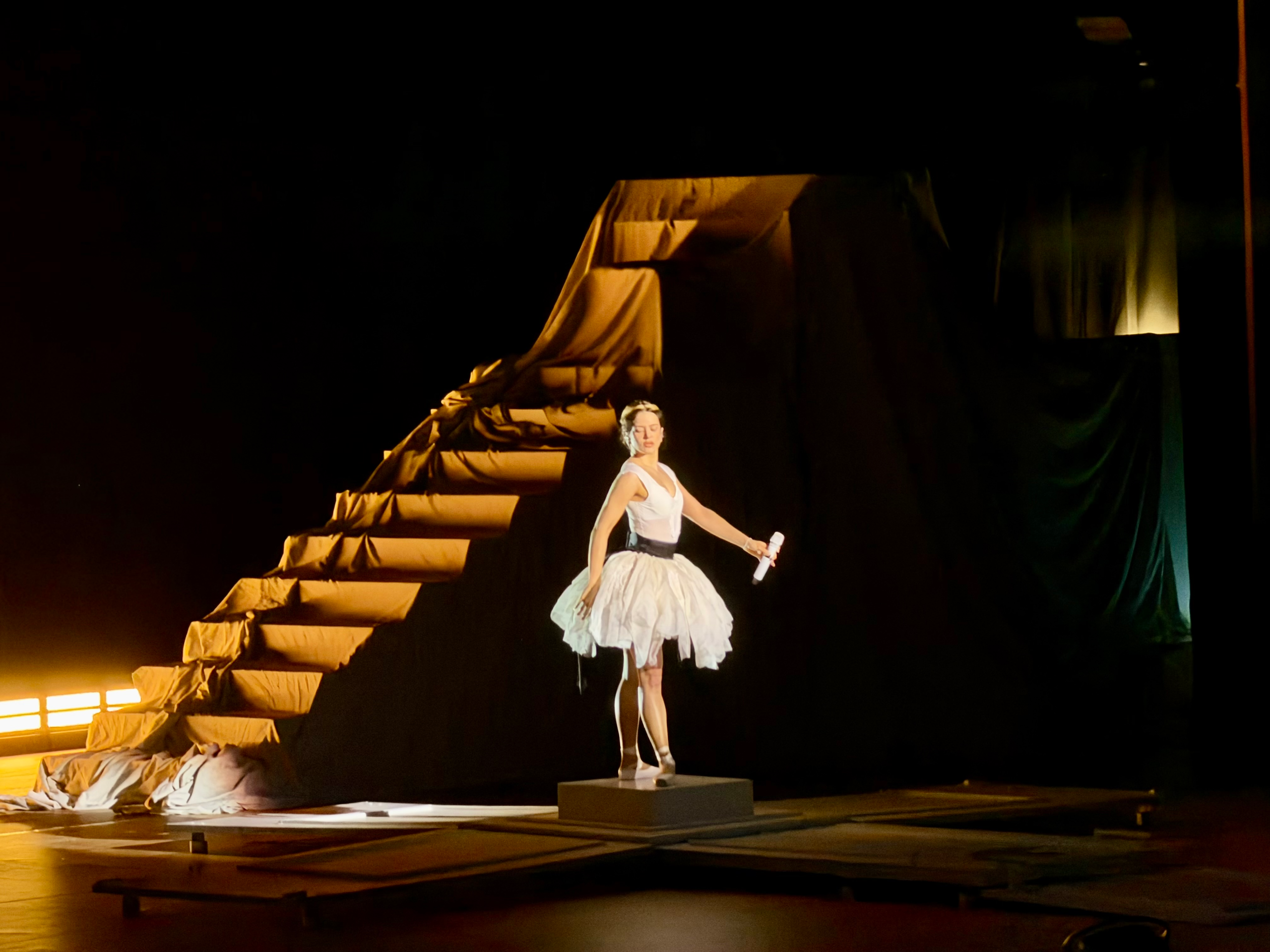
The stage was clean but striking. Behind it stood what looked like the back of a large white canvas, marked with LUX in one corner and Rosalía’s signature at the other. In the center of the arena, an open space was reserved for the orchestra — an early sign that this would not be a typical pop production built only around screens and lights.
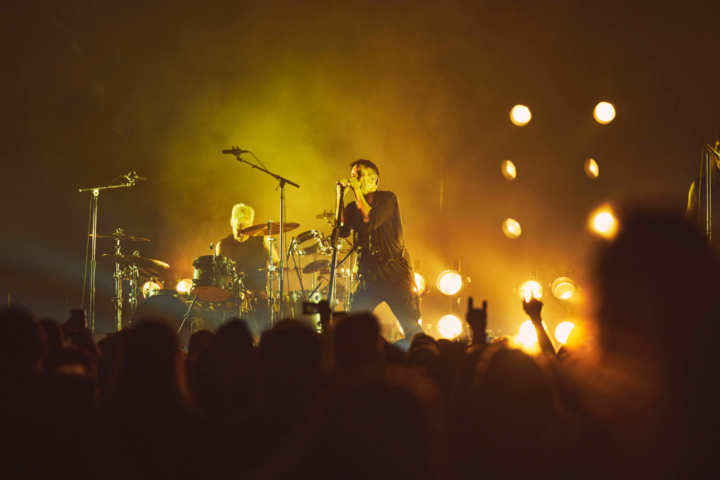
A sense of ceremony carried through the night, but it never made the show feel restrained. Rosalía’s LUX tour is grand, just not in the usual arena-pop way. Rather than depending on flashy digital overload, the performance found its scale through orchestra, choreography, religious imagery, and the collective force of bodies moving in sync. It was massive in a human way.
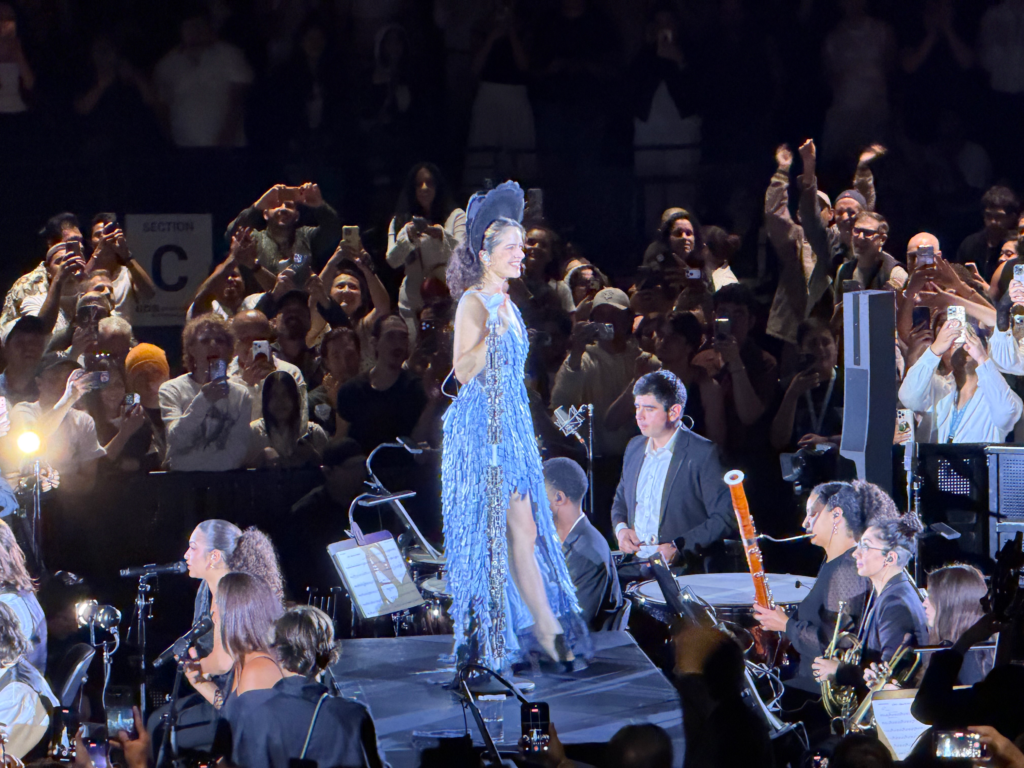
At the center of it all was Rosalía’s voice. For an artist whose work often invites conversation around concept, fashion, production, and genre, the live show made one thing clear: her voice remains the anchor. It carried the emotional weight of the night, moving between delicacy and force without ever getting swallowed by the size of the room.
The dancers gave that voice a physical shape. They lifted her, surrounded her, and built images around her body. During “La Perla,” they wrapped their arms around her in a formation that made it look as if she were wearing a dress made of limbs. It was one of the night’s clearest images: spectacle built from bodies rather than machinery.
The religious imagery felt strongest during “CUTE,” when Rosalía moved to the center of the arena, where the orchestra had been positioned, as a large thurible-like structure swung above her and released what looked like smoke into the air. The image drew directly from Catholic ritual, echoing the use of incense in mass and reinforcing the devotional tone that had been building throughout the night.
That sense of ritual carried into one of the show’s most unexpected moments. Chappell Roan appeared not for a duet, but as part of a staged confession. Split across the screens on either side of the stage, appearing as if they were in separate Catholic confessional boxes, she spoke to Rosalía about being hurt in a past relationship, setting up “La Perla.” It worked because it belonged to the world of the show, folding naturally into Lux’s themes of confession, heartbreak, release, and religion.
But Lux was not all solemnity. Just as quickly as the show could turn confessional, it could also turn physical and explosive. “Berghain” became one of the night’s most kinetic performances, breaking into a techno-inspired dance sequence that brought a rave-like energy into the room without losing the show’s human frame.
Though the performance took place in Oakland, Rosalía’s repeated mentions of San Francisco gave the night a broader Bay Area frame. In the shadow of the world’s most tech-obsessed region, that choice felt especially resonant. Where technology is often built around the dream of overcoming human limitation, Rosalía’s vision of transcendence moved in the opposite direction. Lux found the divine not by escaping the body, but by returning to it, through breath, voice, ritual, movement, and the physical force of musicians in a room.
Her latest album is not a rejection of the future so much as a refusal to let the future flatten everything human. A vision of modern pop that reaches for choirs, orchestras, flamenco, prayer, and songs that feel carved by hand.
By the final moments, Oakland Arena felt fully absorbed into the world of Lux — sacred, physical, and alive.